







Birmingham’s Billion-Pound Moment
What Goldman Sachs and Government Investment Mean for the City's Property Market
The numbers tell their own story. Goldman Sachs is doubling its Birmingham workforce to over 1,000 people. The government is committing £2.5 billion in multi-year funding. Several billion pounds are earmarked for UK tech investment, with Birmingham at its centre. This isn't hype. This is capital - serious, institutional capital backing the city's trajectory in a way we haven't seen before, creating Birmingham's billion-pound moment.Two Announcements, One Message
Within 24 hours of the Chancellor's Budget, Goldman Sachs confirmed it would expand its Birmingham office with 500 new roles, taking its total headcount in the city to over 1,000. The investment bank, which opened its Birmingham technology hub in 2022, stated it was ready to commit "several billion pounds" to critical parts of the UK economy, including AI and digital infrastructure. The timing wasn't coincidental. The Budget had just handed the West Midlands its first-ever multi-year settlement, over £2.5 billion, to drive forward Mayor Richard Parker's Growth Plan, targeting 100,000 new jobs and 120,000 new homes. What we're seeing is alignment. Private capital and public investment are moving in the same direction, at the same time, in the same city.Why Birmingham, Why Now
Goldman Sachs didn't stumble into Birmingham. The bank has been methodical about its expansion beyond London, establishing offices in what it calls "strategic locations" where it can access talent outside traditional financial hubs. Birmingham fits that brief precisely. The city has:- Over 1.1 million residents, with nearly 40% under 25
- Five universities producing 80,000 graduates annually
- An economy contributing over £30 billion per year
- Significantly lower operating costs than London
- HS2 connectivity reducing London travel time to under an hour
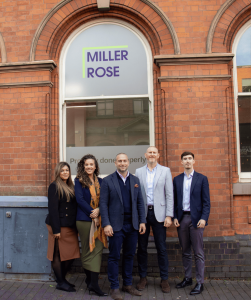
"When Goldman Sachs commits several billion pounds to UK tech investment and chooses Birmingham as a primary hub, that's not a marketing statement. That's capital allocation based on hard analysis of talent, infrastructure, and long-term viability,"says Andy Butts, Miller Rose's founder and Sales Director.
"We're seeing this pattern repeat-HSBC, Deutsche Bank, PwC making similar decisions. What it tells serious investors is simple: the fundamentals here are sound. Birmingham isn't trying to be London. It's offering something different-lower costs, strong graduate pipeline, genuine affordability that's exactly what attracts this kind of institutional commitment. The property market will respond to this employment growth, but it needs to be understood properly, not chased blindly."The government's settlement reinforces this foundation. The £389 million for 2025-26 alone will fund transport improvements, skills training for 58,000 people, and crucially, housing delivery. This is the infrastructure that makes a city work-not just for today's residents, but for the thousands of professionals these new jobs will attract.
The Property Market Implications
When Goldman Sachs commits to 500 new roles over the coming years, those aren't just jobs. They are 500 households looking for somewhere to live. Many will be well-paid technology professionals, engineers, and specialists relocating from London or joining from Birmingham's graduate pool. Current market fundamentals already support this influx:Supply and Demand
Birmingham is building, but not nearly fast enough. The city needs 120,000 new homes - the government's own target - while current delivery rates fall well short. This structural undersupply has pushed rents up 7% year-on-year to an average of £1,120 per month.Rental Yields
City centre yields are running at 5-7%, with some postcodes delivering 6.7%. These aren't speculative numbers - they're based on actual market performance, driven by genuine tenant demand.Capital Growth
Savills forecasts Birmingham property prices rising 4.5% in 2025, ahead of the UK average. Over five years, the projection is 26.4% growth. The market has already delivered 21.8% growth over the past five years, despite broader economic headwinds.Affordability Gap
At an average of £234,000, Birmingham property remains significantly more accessible than Manchester (£250,000+) or London (£525,000+). For investors and relocating professionals alike, the value proposition is clear."We're already seeing the impact of these corporate relocations in both our sales and lettings activity,"says Stuart Macdiarmid, Sales Director at Miller Rose.
"The professional relocating from London for a Goldman Sachs role has different requirements-they're looking for quality new builds in well-connected areas, they understand the value of good transport links, and they're prepared to pay for it. On the lettings side, we're seeing faster turnaround times for the right properties in the right locations. On sales, we're working with more buyers who understand Birmingham's trajectory and want to position themselves ahead of further growth. What matters is matching the right property to the right profile, whether that's a relocated professional looking to rent near One Centenary Way or a buyer who sees where the employment map is shifting."
What This Means for Different Investor Types
UK Investors
If you're looking at Birmingham from elsewhere in the UK, the Goldman Sachs expansion is a tangible marker of economic substance. This isn't speculative regeneration-it's operational reality. The company already employs over 500 people in the city and is now committing to double that. These are high-value jobs creating sustained rental demand.International Investors
For overseas investors, particularly those focused on UK regional cities, this represents validation. Goldman Sachs' decision to expand here, backed by multi-billion pound government investment, signals confidence in Birmingham's long-term prospects. The combination of affordable entry prices, strong yields, and institutional backing creates a compelling risk-adjusted return profile.Developers and Landowners
The government's £2.5 billion settlement includes specific allocations for housing delivery and regeneration. With 120,000 homes needed and a clear political commitment to delivery, the planning and funding environment should become more supportive. Land values in well-connected areas near employment hubs will respond accordingly.The Infrastructure Piece
None of this works without proper infrastructure, and that's where the government settlement becomes critical. The funding includes:- £211 million for transport (on top of existing commitments)
- Investment in Metro expansion, including a new route to the Sports Quarter
- Improvements to bus services, cycle routes, and EV charging
- Skills training for over 58,000 people
- Retrofit programmes cutting fuel costs for residents
Reading the Market Correctly
Here's what this news isn't: it isn't a signal to chase any Birmingham property regardless of location, quality, or fundamentals. That's how people lose money. What it does mean is that Birmingham's structural drivers-the ones we've been tracking for years-are now backed by significant institutional commitment. The trajectory is clearer. The timeline is more defined. The capital is confirmed. Good investment decisions still come down to specifics: which development, which area, what rental profile, what exit strategy. But those decisions now sit within a stronger macroeconomic context.The Bigger Picture
Goldman Sachs' expansion and the government's settlement aren't isolated events. They're part of a broader pattern:- HSBC relocated its UK headquarters to Birmingham
- Deutsche Bank, PwC, and other major firms have expanded here
- Major developers are committing capital to large-scale projects
- The Big City Plan continues transforming the urban core
What We're Watching
Over the coming months, we'll be tracking:- How quickly Goldman Sachs fills these 500 roles, and where these professionals choose to live
- Government progress on the housing delivery targets within the Growth Plan
- Rental market response in areas well-connected to One Centenary Way and other major employment sites
- Planning applications and site assembly in key regeneration zones
- Further corporate relocations or expansions following Goldman's lead